Showing posts with label CHI_MED. Show all posts

Wednesday, 28 November 2018

Palliative care technology (professional interest meets intensely personal experience)

About 10 years ago, when I first started working on infusion devices, I met a medical director who did a lot of work in hospices; he noted that the motors in the syringe drivers in use at that time hummed gently while delivering medication, and that many families hated the constant reminder that this meant that their loved one was on end-of-life care.

Recently, I have experienced this at first-hand, except that the syringe driver being used was mercifully quiet, and did nothing to remind us of its presence. It only really featured when Dad (now very peacefully sleeping) had to be turned to a different position, when the care professionals had to take care not to occlude or dislodge the line. And yet this simple device had huge emotional import: it still, silently, announced that the end of a life was near. It was exactly the ending that we had agreed we would want if possible: peaceful, not disrupted by any invasive or disruptive interventions, with family around. And yet I still found myself wanting to remove the driver because it signified a conscious decision, or determination, that Dad was indeed going to die. Maybe if I removed the driver then Dad would spring back into life. So I find myself with very mixed emotions about the driver: gratitude that it did indeed contribute to a peaceful, pain-free ending combined with distress that it announced and determined the inevitability of that ending.

As a technology professional, I of course also found the device interesting: the nurse who set it up did so with great care, and clearly found it easy to use: it is a task she performs routinely. But the three aspects that we highlight in our paper on "Bags, Batteries and Boxes" all came up in the conversation around the driver. The disposable bag provided was identical to the one featured on the left in Figure 1 of our paper (though all it did was notionally hide the driver which was, in any case, hidden under the sheet). The nurse replaced the battery at the start and after 24 hours to minimise the risk of it running out of charge. The box was locked to prevent tampering (correct) but, bizarrely, when it came to removing the driver after Dad's death, I was the only person in the room who knew where the key was located, which rather undermined its role as protection against tampering. Since no nurse visited after Dad's death and I didn't want him to be moved while still attached to said driver, I asked the doctor to remove the butterfly needle. Clearly, the doctor had never done such a thing before, reinforcing findings from our study of incident reports involving syringe drivers used in private homes that doctors are sometimes put in the position of having to use technology they have no familiarity with. Thankfully, the doctor did kindly remove the line, gently as if removing from a living patient, and we could send Dad off suitably clothed and unencumbered by redundant technology. I can only assume that the driver was returned to the community nurse team later.

I'll close by thanking the amazing staff at Tegfield House, who cared so diligently for both Dad and us and the equally amazing NHS nurses and doctors who cared for Dad over many years, and particularly in his final hours.

Tuesday, 8 September 2015

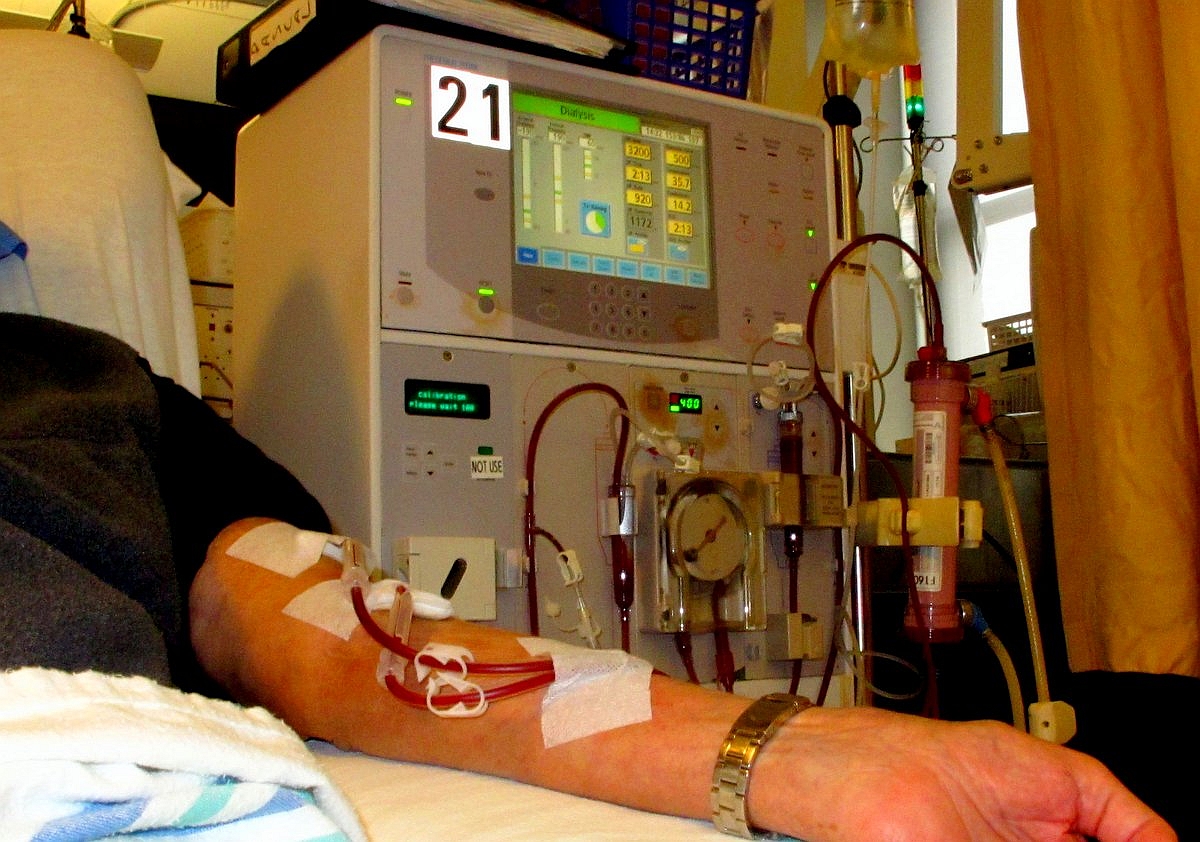
Experiences of home haemodialysis


An open letter to study participants:

You generously shared your experiences of managing your care on home haemodialysis (HHD), and of using the dialysis machine. You were one of 19 patients and families, or members of care teams, across four NHS Trusts who took part in the study. There were lots of common themes in what you told us:
  • about the challenges of learning to do dialysis in the first place (and how scary it was in the first few weeks at home), but how it became routine (“like driving a car”) over time;
  • about the challenges of troubleshooting, particularly when the problem was an unfamiliar one;
  • about the ways your home care team support you – and might be able to support you better if you had more seamless data exchange with your team;
  • about the common difficulties, such as clearing bubbles from the system and remembering to open and close all clamps at the right time; and
  • about the various strategies you have discovered for keeping yourselves safe.

The project has now finished, and we’ve been reporting the findings as widely as possible:
We hope that this project can ‘make visible’ your experiences and practices in managing care at home, and that this will help manufacturers to design next-generation systems, and nephrology services in planning effective home care support.

Thank you to everyone (patients, carers and professionals) who made the study possible.

Monday, 31 August 2015

The Digital Doctor


I’ve just finished reading The DigitalDoctor by Robert Wachter. It’s published this year, and gives great insight into the US developments in electronic health records, particularly over the past few years: Meaningful Use and the rise of EPIC. The book manages to steer a great course between being personal (about Wachter’s career and the experiences of people around him) and drawing out general themes, albeit from a US perspective. I’d love to see an equivalent book about the UK, but suspect there would be no-one qualified to write it.

The book is simultaneously fantastic and slightly frustrating. I'll deal with the frustrating first: although Wachter claims that a lot of the book is about usability (and indeed there are engaging and powerful examples of poor usability that have resulted in untoward incidents), he seems unaware that there’s an entire discipline devoted to understanding human factors and usability, and that people with that expertise could contribute to the debate: my frustration is not with Wachter, but with the fact that human factors is apparently still so invisible, and there still seems to be an assumption that the only qualification that is needed to be an expert in human factors is to be a human.

The core example (the overdose of a teenage patient with 38.5 times the intended dose of a common antibiotic) is told compellingly from the perspectives of several of the protagonists:

    poor interface design leads to the doctor specifying the dose in mg, but the system defaulting to mg/kg and therefore multiplying the intended dose by the weight of the patient;

    the system issues so many indistinguishable alerts (most very minor) that the staff become habituated to cancelling them without much thought – and one of the reasons for so many alerts is the EHR supplier covering themselves against liability for error;

    the pharmacist who checked the order was overloaded and multitasking, using an overly complicated interface, and trusted the doctor;

    the robot that issued the medication had no ‘common sense’ and did not query the order;

    the nurse who administered the medication was new and didn’t have anyone more senior to quickly check the prescription with, so assumed that all the earlier checks would have caught any error, so the order must be correct;

    the patient was expecting a lot of medication, so didn’t query how much “a lot” ought to be.
This is about design and culture. There is surprisingly little about safer design from the outset (it’s hardly as if “alert fatigue” is a new phenomenon, or as if the user interface design and confusability of units is surprising or new): while those involved in deploying new technology in healthcare should be able to learn from their own mistakes, there’s surely also room for learning from the mistakes (and the expertise!) of others.

The book covers a lot of other territory: from the potential for big data analytics to transform healthcare to the changing role of the patient (and the evolving clinician–patient relationship) and the cultural context within which all the changes are taking place. I hope that Wachter’s concluding optimism is well founded. It’s going to be a long, hard road from here to there that will require a significant cultural shift in healthcare, and across society. This book really brought home to me some of the limitations of “user centred design” in a world that is trying to achieve such transformational change in such a short period of time, with everyone having to just muddle through. This book should be read by everyone involved in the procurement and deployment of new electronic health record systems, and by their patients too... and of course by healthcare policy makers: we can all learn from the successes and struggles of the US health system.

Sunday, 24 May 2015

Digital Health: tensions between hype and reality

There are many articles predicting an amazing future for digital technologies for healthcare: wearables, implantables, wirelessly enabled to gather vital signs information and collate it for future sensemaking, by the individual, clinicians and population health researchers. Two examples that have recently come to my attention are a video by the American Psychiatry Association and a report by Deloitte. The possibilities are truly transformational.

Meanwhile, I recently visited a friend who has Type II diabetes. On his floor, half hidden by a table, I spotted what I thought was a pen lid. It turned out to be the top of his new lancing kit. Although he had been doing blood glucose checks daily for well over a decade, he hadn't done one for over two weeks. Not just because he'd lost an essential part of the equipment, but because he'd been prescribed the new tool and hadn't been able to work out how to use it. So losing part of it wasn't a big deal: it was useless to him anyway. He told me that when he'd reported his difficulties to his clinician, he'd... been prescribed a second issue of exactly the same equipment. So now he has three sets of equipment: the original (AccuChek) lancing device and blood glucose meter, which he has used successfully for many years, but which he can't use now because he doesn't have spare consumables; and two lancing devices and meters (from a different manufacturer), with plenty of spare consumables, which he can't use because he finds the lancing device too difficult to use. And in trying to work out with him what the problem was, we managed to break one of them. Good thing he's got a spare!

If we think it's just isolated individuals who struggle, it's not: a recent report from Forbes reports similar issues at scale: poor usability of electronic health records and patient portals that are making work less efficient and effective rather than more.

So on the one hand we have the excitement of future possibilities that are gradually becoming reality for many people, and on the other hand we have the lived experiences of individuals. And for some people, change is not necessarily good. The real challenge is to design a future that can benefit all, not just the most technology-savvy in society.

Friday, 9 January 2015

Compliance, adherence, and quality of life

My father-in-law used to refuse presents on the principle that all he wanted was a "bucket full of good health". And that was something that no one is really in a position to give. Fortunately for him (and us!) he remained pretty healthy and active until his last few weeks. And this is true for many of us: that we have mercifully little experience of chronic ill health. But not everyone is so lucky.

My team has been privileged to work with people suffering from chronic kidney disease, and with their families, to better understand their experiences and their needs when managing their own care. Some people with serious kidney disease have a kidney transplant. Others have dialysis (which involves having the blood 'cleansed' every couple of days). There is widespread agreement amongst clinicians that it's best for people if they can do this at home. And the people we worked with (who are all successful users of dialysis technology at home) clearly agreed. They were less concerned, certainly in the way they talked with us, about their life expectancy than about the quality of their lives: their ability to go out (for meals, on holiday, etc.), to work, to be with their families, to feel well. Sometimes, that demanded compromise: some people reported adopting short-cuts, mainly to reduce the time that dialysis takes. And one had her dialysis machine set up on her verandah, so that she could dialyse in a pleasant place. Quality of life matters too.

The health literature often talks about "compliance" or "adherence", particularly in relation to people taking medication. There's the same concern with dialysis: that people should be dialysing according to an agreed schedule. And mostly, that seemed to be what people were doing. But sometimes they didn't because other values dominated. And sometimes they didn't because the technology didn't work as intended and they had to find ways to get things going again. Many of them had turned troubleshooting into an art! As more and more health management happens at home, which means that people are immediately and directly responsible for their own welfare, it seems likely that terms like "compliance" and "adherence" need to be re-thought to allow us all to talk about living as enjoyably and well as we can – with the conditions we have and the available means for managing those conditions. And (of course) the technology should be as easy to use and safe as possible. Our study is hopefully of interest: not just to those directly affected by kidney disease or caring or designing technology for managing it, but also for those thinking more broadly about policy on home care and how responsibility is shared between clinicians, patients and family.

Wednesday, 7 January 2015

Strategies for doing fieldwork for health technology design


The cartoons in this blog post are  from Fieldwork for Healthcare: Guidance for Investigating Human Factors in Computing Systems.  © 2015 Morgan and Claypool Publishers, www.morganclaypool.com. Used with permission.
One of the themes within CHI+MED has been better understanding how interactive medical devices are used in practice, recognising that there are often important differences between work as imagined and work as done.  This has meant working with many people directly involved in healthcare (clinicians, patients, relatives) to understand their work when interacting with medical devices: observing their interactions and interviewing them about their experiences. But doing fieldwork in hospitals and in people’s homes is challenging:
  • You need to get formal ethical clearance to conduct any study involving clinicians or patients. As I’ve noted previously, this can be time-consuming and frustrating. It also means that it can be difficult to change the study design once you discover that things aren’t quite the way you’d imagined, however much preparatory work you’d tried to do. 
  • Hospitals are populated by people from all walks of life, old and young, from many cultures and often in very vulnerable situations. They, their privacy and their confidentiality need to be respected at all times.
  • Staff are working under high pressure. Their work is part-planned, part-reactive, and the environment is complex: organisationally, physically, and professionally. The work is safety-critical, and there is a widespread culture of accountability and blame that can make people wary of being observed by outsiders.
  • Health is a caring profession and, for the vast majority of staff, technology use is a means to an end; the design of that technology is not of interest (beyond being a source of frustration in their work).
  • You’re always an ‘outsider’: not staff, not patient, not visitor, and that’s a role that it can be difficult to make sense of (both for yourself and for the people you’re working with).
  • Given the safety-critical nature of most technologies in healthcare, you can’t just prototype and test ‘in the wild’, so it can be difficult to work out how to improve practices through design.

When CHI+MED started, we couldn’t find many useful resources to guide us in designing and conducting studies, so we found ourselves ‘learning on the job’. And through discussions with others we realised that we were not alone: that other researchers had very similar experiences to ours, and that we could learn a lot from each other.

So we pooled expertise to develop resources to give future researchers a ‘leg up’ for planning and conducting studies. And we hope that the results are useful resources for future researchers:

  • We’ve recently published a journal paper that focuses on themes of gaining access; developing good relations with clinicians and patients; being outsiders in healthcare settings; and managing the cultural divide between technology human factors and clinical practice.
  • We’ve published two books on doing fieldwork in healthcare. The first volume reported the experiences of researchers through 12 case studies, covering experiences in hospitals and in people’s homes, in both developed and developing countries. The second volume presents guidance and advice on doing fieldwork in healthcare. The chapters cover ethical issues, preparing for the context and networking, developing a data collection plan, implementing a technology or practice, and thinking about impact.
  • Most of our work is neither pure ethnography nor pure Grounded Theory, but somewhere between the two in terms of both data gathering and analysis techniques: semi-structured, interpretivist, pragmatic. There isn’t an agreed name for this, but we’re calling them semi-structuredqualitative studies, and have written about them in these terms.

If you know of other useful resources, do please let us know!

Saturday, 5 April 2014

Never mind the research, feel the governance

In the past 5 days, I have received and responded to:
  • 16 emails from people in the university, the REC and the hospital about one NHS ethics application that required a two-word change to one information sheet after it had already been approved by both the university and the REC - but the hospital spotted a minor problem and now it has to go around the whole cycle again, which is likely to take several weeks at least.
  • 6 emails about who exactly should sign one of the forms in a second ethics application (someone in the university or the hospital).
  • 12 emails about the set of documents (I lost count of what's needed past 20 items) needed for a third application.
I dread to think what the invisible costs of all these communications and actions are, when scaled up to all the people involved in the process (and my part is a small one because I delegate most of the work to others), and to all the ethics applications that are going on in parallel.

I thought I was getting to grips with the ethics system for the NHS; I had even thought that it was getting simpler, clearer and more rational over time. But recent experiences show otherwise. This is partly because we're working with a wider range of hospitals than previously, and every one seems to have its own local procedures and requirements. Some people are wonderful and really helpful; others seem to consider it to be their job to find every possible weakness and block progress. I have wondered at times whether this is because we are not NHS employees (or indeed even trained clinicians). But it seems not: clinical colleagues report similar problems; in fact, they've put a cost on the delays that they have experienced through the ethical clearance process. Those costs run into hundreds of thousands of pounds. We don't do research to waste money like this, but to improve the quality and safety of patient care.

Today, there's an article in the Guardian about the under-resourcing of the health service and the impact this is having on patient care. Maybe I'm naive, but if the inefficiencies that we find in the process of gaining permission to conduct a research study in the NHS are replicated in all other aspects of health service delivery, it's no wonder they feel under-resourced.

Tuesday, 1 April 2014

Looking for the keys under the lamp post? Are we addressing the right problems?

Recently, I received an impassioned email from a colleague: "you want to improve the usability of the bloody bloody infusion pump I am connected to? give it castors and a centre of gravity so I can take it to the toilet and to get a cup of coffee with ease". Along with photos to illustrate the point.

He's completely right: these are (or should be) important design considerations. People still want to live their lives and have independence as far as possible, and that's surely in the interests of staff as well as patients and their visitors.

In this particular case, better design solutions have been proposed and developed. But I've never seen one of these in use. I've seen plenty of other improvised solutions such as the bed-bound patient being wheeled from one ward to another with a nurse walking alongside holding up the bag of fluid while the pump is balanced on the bed with the patient.

Why don't hospitals invest in better solutions? I don't know. Presumably because the problem is invisible to the people who make purchasing decisions, because staff and patients are accustomed to making do with the available equipment, and because better equipment costs more but has minimal direct effect on patient outcomes.

An implication of the original message is that in CHI+MED we're addressing the wrong problem: that in doing research on interaction design we're missing the in-your-face problem that the IV pole is so poorly designed. That we're like the drunk looking for the keys under the lamp post because that's where the light is, when in fact the keys got dropped somewhere else. Others who claim that the main problem in patient safety is infection control are making the same point: we're focusing our attention in the wrong place.

I wish there were only one problem to solve – one key to be found, under the lamp post or elsewhere. But that's not the case. In fact, in healthcare there are so many lost keys that they can be sought and found all over the place. Excuse me while I go and look for some more...


Thursday, 27 March 2014

Mind the gap: the gulfs between idealised and real practice

I've given several talks and written short articles about the gap between idealised and real practice in the use of medical devices. But to date I've blurred the distinctions between concerns from a development perspective and those from a procurement and use perspective.

Developers have to make assumptions about how their devices will be used, and to design and test (and build safety cases, etc.) on that basis. Their obligation (and challenge) is to make the assumptions as accurate as possible for their target market segment. And to make the assumptions as explicit as possible, particularly for subsequent purchasing and use. This is easier said than done: I write as someone who signed an agreement on Tuesday to do a pile of work on our car, most of which was required but part of which was not; how the unnecessary work got onto the job sheet I do not know, but because I'd signed for it, I had to pay for it. Ouch! If I can accidentally sign for a little bit of unnecessary work on the car, how much easier is it for a purchasing officer to sign off for unnecessary features, or slightly inappropriate features, on a medical device? [Rhetorical question.]

Developers have to work for generic market segments, whether those are defined by the technological infrastructure within which the device sits, the contexts and purposes for which the device will be used, the level of training of its users, or all of the above. One device probably can't address all needs, however desirable 'consistency' might be.

In contrast, a device in use has to fit a particular infrastructure, context, purpose, user capability... So there are many knowns where previously there were unknowns. And maybe the device fits well, and maybe it doesn't. And if it doesn't, then something needs to change. Maybe it was the wrong device (and needs to be replaced or modified); maybe it's the infrastructure or context that needs to be changed; maybe the users need to be trained differently / better.

When there are gaps (i.e., when technology doesn't fit properly), people find workarounds. We are so ingenious! Some of the workarounds are mostly positive (such as appropriating a tool to do something it wasn't designed for, but for which it serves perfectly well); some introduce real vulnerabilities into the system (by violating safety features to achieve a short-term goal). When gaps aren't even recognised, we can't even think about them or how to design to bridge them. We need to be alert to the gaps between design and use.

Thursday, 10 October 2013

Safety: the top priority?

For the past two days, I've been at the AAMI Summit on Healthcare Technology in Nonclinical Settings. The talks have all been short and to-the-point, and generally excellent. They included talks from people with first-hand experience of living with or caring for someone with a long term condition, as well as developers, researchers... but no regulators, because of the US government shutdown. For many of the participants, the more memorable talks have been the first hand accounts of living with medical devices and of the things people do and encounter. I'll change names, but the following are some examples.

Megan's partner is on oxygen therapy. The cylinders are kept in a cupboard near an air conditioning unit. One day, a technician visited to fix something on the aircon unit. As he was working, she heard a sound like a hot air balloon. She stopped him just in time: he had just ignited a blow-torch. Right next to the oxygen cylinders. Naked flames and oxygen are an explosive combination. In this case, the issue was one of ignorance: the cylinders weren't sufficiently clearly labelled for the technician to realise what they were. However, there are also accounts of people on oxygen therapy smoking; in some cases, people continued to smoke even after suffering significant burns. That's not ignorance; it's a choice they make. Apparently, the power of the cigarette is greater than safety considerations.

Fred's son has type 1 diabetes. He was being bullied at school, to a degree that he found hard to bear. He took to poking a pencil into his insulin pump to give himself an excess dose, causing hypoglycemia so that his parents would be called to take him home (or, in more serious cases, to hospital). Escaping being bullied was more important than suffering the adverse effects of hypoglycemia.

In our own studies, we have found people making tradeoffs such as these. The person with diabetes who avoids taking their glucose meter or insulin on a first date because he doesn't want the new girlfriend to know about the diabetes until they have got to know each other (as people) a bit better first. The person on home haemodialysis who chooses to dialyse on her veranda even though the dialysate doesn't work well when it is cold, so she needs to use a patio heater as well. The veranda is a much more pleasant place to be than indoors, so again she's making a tradeoff.

Patient safety is a gold standard. We have institutes and agencies for patient safety. It's incumbent on the healthcare system (clinicians, manufacturers, regulators, etc.) to minimise the risks to patients of their treatment, while recognising that risks can't be eliminated. But we also need to remember that patients are also people. And as people we don't always prioritise our own safety. We drive fast cars; we enjoy dangerous sports; we dodge traffic when crossing the road; etc. We're always making tradeoffs between safety and other values. That doesn't change just because someone's "a patient".

Thursday, 18 July 2013

When reasoning and action don't match: Intentionality and safety

My team have been discussing the nature of “resilient” behavior, the basic idea being that people develop strategies for anticipating and avoiding possible errors, and creating conditions that enable them to recover seamlessly from disturbances. One of the examples that is used repeatedly is leaving one’s umbrella by the door as a reminder to take it when going out in case of rain. Of course, getting wet doesn’t seriously compromise safety for most people, but let’s let that pass: its unpleasant. This presupposes that people are able to recognize vulnerabilities and identify appropriate strategies to address them. Two recent incidents have made me rethink some of the presuppositions.

On Tuesday, I met up with a friend. She had left her wallet at work. It had been such a hot day that she had taken it out of her back pocket and put it somewhere safe (which was, of course, well hidden). She recognized that she was likely to forget it, and thought of ways to remind herself: leaving a note with her car keys, for instance. But she didn’t act on this intention. So she had done the learning and reflection, but it still didn’t work for her because she didn’t follow through with action.

My partner occasionally forgets to lock the retractable roof on our car. I have never made this mistake, but wasn’t sure why until I compared his behavior with mine. It turns out he is more relaxed than I am, and waits while the roof closes before taking the next step, which is often to close the windows, take the keys out of the lock and get out of the car. I, in contrast, am impatient. I can’t wait to lock the roof as it closes, so as the roof is coming over, my arm is going up ready to lock it. So I never forget (famous last words!): the action is automatised. The important point in relation to resilience is that I didn’t develop this behavior in order to keep the car safe or secure: I developed it because I assumed that the roof needed to be secured and I wanted it to happen as quickly as possible. So it is not intentional, in terms of safety, and yet it has the effect of making the system safer.

So what keeps the system safe(r) is not necessarily what people learn or reflect on, but what they act on. This is, of course, only one aspect of the problem; when major disturbances happen, it’s almost certainly more important to consider people’s competencies and knowledge (and how they acquired them). To (approximately) quote a London Underground controller: “We’re paid for what we know, not what we do”. Ultimately, it's what people do that matters in terms of safety; sometimes that can be clearly traced to what they know and sometime it can't.


Saturday, 18 May 2013

When is a medical error a crime?

I've recently had Collateral Damage recommended to me. I'm afraid I can't face reading it: just the summary is enough. Having visited Johns Hopkins, and in particular the Armstrong Institute for Patient Safety, a couple of months ago, I'm pretty confident that the terrible experience of the Walter family isn't universal, even within that one hospital, never mind nationally or internationally. And therein lies a big challenge: that there is such a wide spectrum of experiences and practices in healthcare that it's very difficult to generalise.

There are clearly challenges:
  • the demands of doing science and of providing the best quality patient care may pull in opposing directions: if we never try new things, relying on what is already known as best practice, we may not make discoveries that actually transform care.
  • if clinicians are not involved in the design of future medical technologies then how can those technologies be well designed to support clinical practice? But if clinicians are involved in their design, and have a stake in their commercial success, how can they remain objective in their assessments of clinical effectiveness?
There are no easy answers to such challenges, but clearly they are cultural and societal challenges as well as being challenges for the individual clinician. They are about what a society values and what behaviours are acceptable and/or rewarded, whether through professional recognition or financially.

I know that I have a tendency to view things positively, to argue for a learning culture rather than a blame culture. Accounts like "Collateral Damage" might force one to question that position as being naive in the extreme. For me, though, the question is: what can society and the medical establishment learn from such an account? That's not an easy question to answer. Progress in changing healthcare culture is almost imperceptibly slow: reports such as "to err is human" and "an organisation with a memory", both published over a decade ago (and the UK report now officially 'archived'), haven't had much perceptible effect. Consider, for example, the recent inquiry into failings in Mid Staffordshire.

Bob Wachter poses the question "when is a medical error a crime?". He focuses on the idea of a 'just culture': that there is a spectrum of behaviours, from the kinds of errors that anyone could make (and for which learning is a much more constructive response than blaming), through 'at risk' behaviours to 'reckless' behaviours where major risks are knowingly ignored.

The Just Culture Community notes that "an organisation's mission defines its reason for being". From a patient's perspective, a hospital's "reason for being" is to provide the best possible healthcare when needed. Problems arise when the hospital's mission is "to generate a profit", to "advance science", or any other mission that might be at odds with providing the best possible care in the short term. The same applies to individual clinicians and clinical teams within the hospital.

I find the idea of a "just culture" compelling. It is not a simple agenda, because it involves balancing learning with blame, giving a sophisticated notion of accountability. It clearly places the onus for ensuring safety at an organisational / cultural level, within which the individual works, interacts and is accountable. But it does presuppose that the different people or groups broadly agree on the mission or values of healthcare. 'Collateral Damage' forces one to question whether that assumption is correct. It is surely a call for reflection and learning: what should the mission of any healthcare provider be? How is that mission agreed on by both providers and consumers? How are values propagated across stakeholders? Etc. Assuming that patient safety is indeed valued, we all need to learn from cases such as this.

Coping with complexity in home hemodialysis

We've just had a paper published on how people who need to do hemodialysis at home manage the activity. Well done to Atish, the lead author.

People doing home hemodialysis are a small proportion of the people who need hemodialysis overall: the majority have to travel to a specialist unit for their care. Those doing home care have to take responsibility for a complex care regime. In this paper, we focus on how people use time as a resource to help with managing care. Strategies include planning to perform actions at particular times (so that time acts as a cue to perform an action); allowing extra time to deal with any problems that might arise; building in time for reflection into a plan (to minimise the risks of forgetting steps); and organising tasks to minimise the number of things that need to be thought about or done at any one time (minimising peak complexity). There is a tendency to think about complex activities in terms of task sequences, and to ignore the details of the time frame in which people carry out tasks, and how time (and our experience of time) can be used as a resource as well as, conversely, placing demands on us (e.g. through deadlines).

This study focused on particular (complex and safety-critical) activity that has to be performed repeatedly (every day or two) by people who may not be clinicians but who become experts in the task. We all do frequent tasks, whether that's preparing a meal or getting ready to go to work, that involve time management. There's great value in regarding time as a resource, to be used effectively, as well as it placing demands on us (not enough time...)

Sunday, 12 May 2013

Engineering for HCI: Upfront effort, downstream pay-back

The end of Engineering Practice 1 (c.1980).
Once upon a time, I was a graduate trainee at an engineering company. The training was organised as three-month blocks in different areas of the company. My first three months was on the (work)shop floor. Spending hours working milling machines and lathes was a bit of shock after studying mathematics at Cambridge. You mean it is possible to use your body as well as your mind to solve problems?!?
I learned that engineering was about the art of the possible (e.g. at that time you couldn't drill holes that went around corners, though 3D printing has now changed our view of what is possible). And also about managing precision: manufacturing parts that were precise enough for purpose. Engineering was inherently physical: about solving problems by designing and delivering physical artefacts that were robust and reliable and fit for purpose. The antithesis of the "trust me, I'm an engineer" view (however much that makes me smile).

Enter "software engineering": arguably, this term was coined to give legitimacy to a certain kind of computer programming. Programming was (and often still is) something of a cottage industry: people building one-off systems that seem to work, but no-one is quite sure of how, or when they might break down. Engineering is intended to reduce the variability and improve the reliability of software systems. And deliver systems that are fit for purpose.

So what does it mean to "engineer" an interactive computer system? At the most recent IFIP Working Group 2.7/13.4 meeting, we developed a video: 'Engineering for HCI: Upfront effort, downstream pay-back'. And it was accepted for inclusion in the CHI2013 Video Showcase. Success! Preparing this short video turned out to be even more difficult than I had anticipated. There really didn't seem to be much consensus on what it means to "engineer" an interactive computer system. There is general agreement that it involves some rigour and systematicity, some use of theory and science to deliver reproducible results, but does the resulting system have to be usable, to be fit for purpose? And how would one measure that? Not really clear.

I started by saying that I once worked for an engineering company. That term is probably fairly unambiguous. But I've never heard of an "interactive systems engineering company" or an "HCI engineering company". I wonder what one of those would look like or deliver.