Showing posts with label time management. Show all posts

Sunday, 18 March 2018

Invisible work

I have been on strike for much of the past four weeks – at least notionally. The truth is more nuanced than that, because I don't actually want my students and other junior colleagues to be disadvantaged by this action. I am, after all, fighting for the future of university education: their future. Yet I do want senior management and the powerful people who make decisions about our work and our pensions to be aware of the strength of feeling, as well as the rational arguments, around the pensions issue.

There have been some excellent analyses of the problem, by academic experts from a range of disciplines. Here are some of my favorites (in no particular order):
As well as standing on picket lines, marching, discussing the issues around the strike, and not doing work that involves crossing said picket lines, I have continued to do a substantial amount of work. It has made me think more about the nature of invisible work. Bonnie Nardi and Yrjo Engestrom identify four kinds of invisible work:
  1. work done in invisible places, such as the highly skilled behind-the-scenes work of reference librarians; to this I would add most of the invisible work done by university staff, out of sight and out of hours.
  2. work defined as routine or manual that actually requires considerable problem solving and knowledge, such as the work of telephone operators; don't forget completing a ResearchFish submission or grappling with the Virtual Learning Environment or many other enterprise software systems.
  3. work done by invisible people such as domestics, (and sometimes Athena SWAN teams!)
  4. informal work processes that are not part of anybody’s job description but which are crucial for the collective functioning of the workplace, such as regular but open-ended meetings without a specific agenda, informal conversations, gossip, humor, storytelling.
The time for (4) has been sadly eroded over the years as demands and expectations have risen without corresponding rises in resourcing.

To these, I would add the invisible work that is invisible because it is apparently ineffectual. E.g., I wrote to our Provost about 12 days ago, but I have no evidence that it was read; it certainly hasn't been responded to in any visible way (reproduced below for the record).

The double-think required to simultaneously be on strike while also delivering on time-limited commitments to colleagues and students has forced me to also develop new approaches to revealing and hiding work. For example, 
  • I have started logging my own work hours so that the accumulated time is visible to me, and although I've been working way more than the hours set out in the Working Time Directive, I'm going to try to bring the time worked down to comply with that directive. This should help me say "no" more assertively in future. That's the theory, at least...
  • I have started saving emails as drafts so as not to send them "out of hours". There are 21 items in my email outbox as I type this; I'll look incredibly productive first thing on Monday morning!
And finally, I will make visible the letter I wrote to the Provost:


Thank you for this encouraging message last week. You are right that none of us takes strike action lightly. We all want to be doing and supporting excellent teaching, research and knowledge transfer, but we are extremely concerned about the proposed pension changes, and we have found no other way to be heard.

I’ve worked in universities since 1981 and this is the first time I have taken strike action. The decision to strike has been one of the harder decisions I have taken in my professional career, but I think the impact of the proposed pension changes on our junior colleagues (and hence on the future of universities) is unacceptable, and I am not persuaded that a DB scheme is unaffordable.

Please continue to work with the other university leaders to find an early resolution to this dispute. UCL isn’t just estates and financial surplus: as you say, it’s a community of world-leading, committed people who work really hard, and who merit an overall remuneration package that is reflective of that. That includes pensions that aren’t a stock market lottery for each individual.

I’d like to be in my office meeting PhD students and post-docs next Monday morning, and in a lecture theatre with my MSc students on Monday afternoon. Please do everything in your power to bring this dispute to a quick resolution so that there’s a real possibility that “normal service” can be resumed next week.

Saturday, 22 June 2013

Time management tools that work (or not)

Today, I missed a lunch with friends. Oops! What happened?

My computer died (beyond repair) a couple of months ago, so I got a new one. Rather that trying to reconstruct my previous way of working, I chose to start again "from scratch", though of course that built a lot on previous practices. One of the changes I introduced was that I separated my work and leisure diaries: work is now recorded in the University Standard Diary (aka Outlook) so that managers and administrators can access my diary as needed; leisure is recorded in Google Calendar (which is what I used to use for everything).

But in practice, there's only one of me, and I only live one life. And most of my 'appointments' are work-related. So I forgot to keep looking in the leisure diary. Hence overlooking today's lunch with friends, which had been in the diary for at least six months. Because it had been in the diary for so long it wasn't "in my head". Doh!

When I was younger, life seemed simpler: if it was Monday -Friday, 9-5 (approx) then it was work time; else it was leisure time. Except holidays. Keep two diaries, one for work and one for leisure. Easy. But the boundaries between work and leisure have blurred. Personal technologies travel to work; work technologies come home; work-time and home-time have poorly defined boundaries. It's hard to keep the plans and schedules separate. But I, like most people, don't particularly want work colleagues to know the minutiae of my personal life. Yes, the work diary allows one to mark entries as "private", but:
1) that suggests that it's a "private" work event, and
2) an entry in a "work" diary is not accessible to my family, although I'd like them to be able to refer to my home diary.

The ontology of my diary is messed up: I want work colleagues to be able to access my work diary and family to be able to access my leisure diary, but actually at the heart of things I want to be able to manage my life, which isn't neatly separated into work and leisure.

Saturday, 18 May 2013

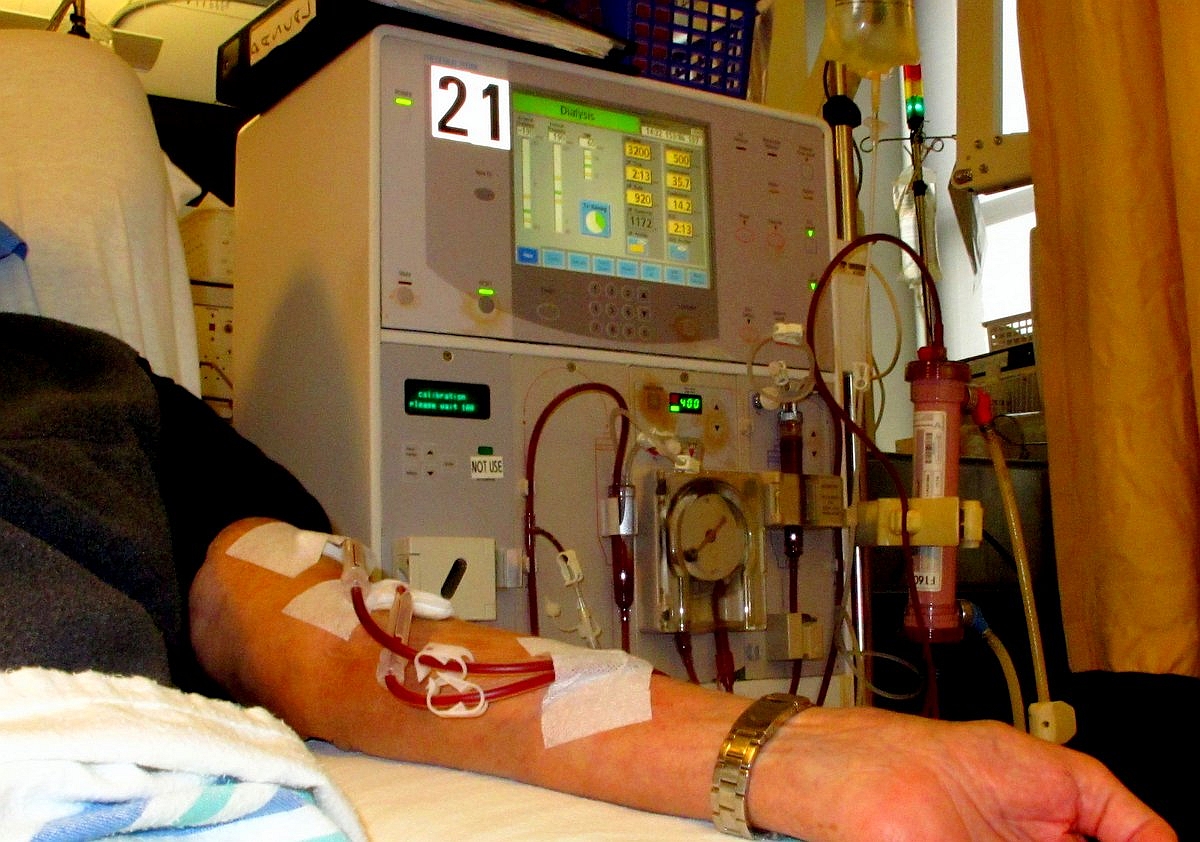
Coping with complexity in home hemodialysis

We've just had a paper published on how people who need to do hemodialysis at home manage the activity. Well done to Atish, the lead author.

People doing home hemodialysis are a small proportion of the people who need hemodialysis overall: the majority have to travel to a specialist unit for their care. Those doing home care have to take responsibility for a complex care regime. In this paper, we focus on how people use time as a resource to help with managing care. Strategies include planning to perform actions at particular times (so that time acts as a cue to perform an action); allowing extra time to deal with any problems that might arise; building in time for reflection into a plan (to minimise the risks of forgetting steps); and organising tasks to minimise the number of things that need to be thought about or done at any one time (minimising peak complexity). There is a tendency to think about complex activities in terms of task sequences, and to ignore the details of the time frame in which people carry out tasks, and how time (and our experience of time) can be used as a resource as well as, conversely, placing demands on us (e.g. through deadlines).

This study focused on particular (complex and safety-critical) activity that has to be performed repeatedly (every day or two) by people who may not be clinicians but who become experts in the task. We all do frequent tasks, whether that's preparing a meal or getting ready to go to work, that involve time management. There's great value in regarding time as a resource, to be used effectively, as well as it placing demands on us (not enough time...)

Wednesday, 19 September 2012

Encountering information: serendipity or overload?

After my keynote at ISIC, one of the participants challenged me on my claim that information overload is a "bad thing" (not that I put it quite like that, but I certainly suggested it was something to be avoided). I framed it as a challenge when trying to design to support serendipity. We had an extended discussion about this later that day.

What Eva made me realise (thanks, Eva!) is that encountering exactly the same information can be regarded positively or negatively depending on the circumstances and the attitude of mind. If the attitude is one of exploring and of opportunity then the experience is typically positive. Eva consumes information enthusiastically on a wide variety of topics, and rarely if ever feels overloaded by the sheer volume of information available.

Whether or not information encountering is regarded as serendipitous is another question. A while ago, I gave a PechaKucha talk on the SerenA project; in the talk, I gave an example that I argue was serendipity: I encountered information that was unexpected, where I made a connection between my ambitions and an opportunity that was presenting itself, and from which the outcome was valuable. I also described the "sandpit" process that initiated SerenA – i.e., putting a bunch of academics together in a space that was conducive to ideas generation. Arguably, this experience was positive and creative, but not serendipitous, because it was designed to lead to positive outcomes. So although we could not have predicted the form of the outcome, we expected there to be an unanticipated outcome. So it wasn't serendipitous. Based on our empirical studies of serendipitous experiences, we have developed a process model of serendipity, namely that "a new connection is made that involves a mix of unexpectedness and insight and has the potential to lead to a valuable outcome. Projections are made on the potential value of the outcome and actions are taken to exploit the connection, leading to an (unanticipated) valuable outcome." From this, we also developed a classification framework
based on different mixes of unexpectedness, insight and value that define a “serendipity space” encompassing different “strengths” of serendipity.

So where does information overload fit? Well, as a busy academic, typical of many busy people, new information (however valuable) often represents new obligations:
  •  to assimilate the information,
  •  to assess its value, and
  •  to act on it. 
I recognise the potential value of opportunities, and feel frustrated by my lack of capacity to exploit them all. And because of limited capacity, every opportunity taken means other opportunities that have to be passed over. In addition, limited memory means that even assimilating all the information I "should" know represents a substantial obligation that I can't hope to fulfill. So I feel under constant threat of information overload. And that seriously inhibits my openness to serendipitous encounters.

As recounted in the PechaKucha talk: twenty-something years ago, when my children were 2 years and 3 months old respectively, I came across an advert for a PhD studentship. It was my "dream" studentship, on an exciting topic and in the perfect location for me. Doing a PhD was not in my plans at the time, but was too good an opportunity to miss. And the outcome has been fantastic. It was unquestionably a serendipitous encounter. Apart from the unintended consequence that I now feel constantly under threat of total information overload!

Saturday, 9 June 2012

Give me a little more time...

A few weeks ago, one of our PhD students, Amir Kamsin, was awarded 3rd prize in the student research competition  at CHI for his research on how we manage our time, and tools to support time management. Congratulations to Amir! The fact that it has taken until now to comment shows how difficult I am finding it to do things in a timely way. Many books and blogs (e.g. ProfSerious') have been written on how we should manage our time; it's difficult to even find the time to read them!

Some years ago, Thomas Green and I did a study of time management, and concluded that "what you get is not what you need". In that paper, we were focusing mainly on diary / calendar management and highlighted important limitations of online diaries, most of which are still true today (e.g. ways of marking meetings as provisional; including travelling time as well as meeting time; and making entries appropriately interpretable by others). In contrast, Amir is focusing on "to do" management. There are many aspects to his findings, of course. Two of them particularly resonate for me...

The first is how much of our time management is governed by emotional factors. It has long been a standing joke in my research group that you can tell when someone is avoiding doing a particular (usually big) job because they suddenly get ultra-productive on other tasks. The guilt about the big job is a great motivator! But I've become increasingly aware that there are even very small tasks that I avoid, either because I don't know where to start or because the first step is daunting. I've started to mentally label these as "little black clouds", and I'm gradually learning to prioritise them before they turn into big black clouds -- not necessarily by doing them immediately, but by committing to a time to do them. No "to-do" management systems that I'm aware of makes emotional factors explicit. Even their implementations of "importance" and "urgency" don't capture the fluidity of these ideas in practice. There's much more to managing tasks and projects than importance and urgency.

The second is how much "to do" information is tied up in email. Not just simple "hit reply" to-dos, but also complex discussions and decisions about projects. There are tools that integrate email, calendars and address books, and there are to-do management systems with or without calendars. But I really want a project management tool that integrates completely seamlessly with both my email and my calendar. And is quick and easy to learn. And requires minimal extra effort to manage. Anyone know of one?