Showing posts with label Distributed Cognition. Show all posts

Tuesday, 8 April 2014

A mutual failure of discovery: DIB and DiCoT

Today, I have been doing literature searching for a paper on Distributed Cognition (DCog). By following a chain of references, I happened upon a paper on Determining Information Flow Breakdown (DIB). DIB is a method for applying the theory of DCog in a semi-structured way in complex settings. The example the authors use in the paper comes from healthcare.

The authors state that "distributed cognition is a theoretical approach without an accepted analytical method; there is no single 'correct way' of using it. [...] the DIB method is a practical application of the theory." At the time that work was published (2007), there were at least two other published methods for applying DCog: the Resources Model (2000) and DiCoT (Distributed Cognition for Teamwork; 2006). The developers of DIB were clearly unaware of this previous work. Conversely, it has taken me seven years from when the DIB paper was published to become aware of it and my team have been working on DCog in healthcare for most of that time. How could that happen?

I can think of several answers involving parallel universes, different literatures, too many different journals to keep track of, the fragility of search terms, needles in haystacks. You take your pick.

Whatever the answer actually is (and it's probably something to do with a needle in another universe), it's close to being anti-serendipity: a connection that is obvious and should have been expected. We clearly have some way to go in developing information discovery tools that work well.

Saturday, 18 May 2013

Coping with complexity in home hemodialysis

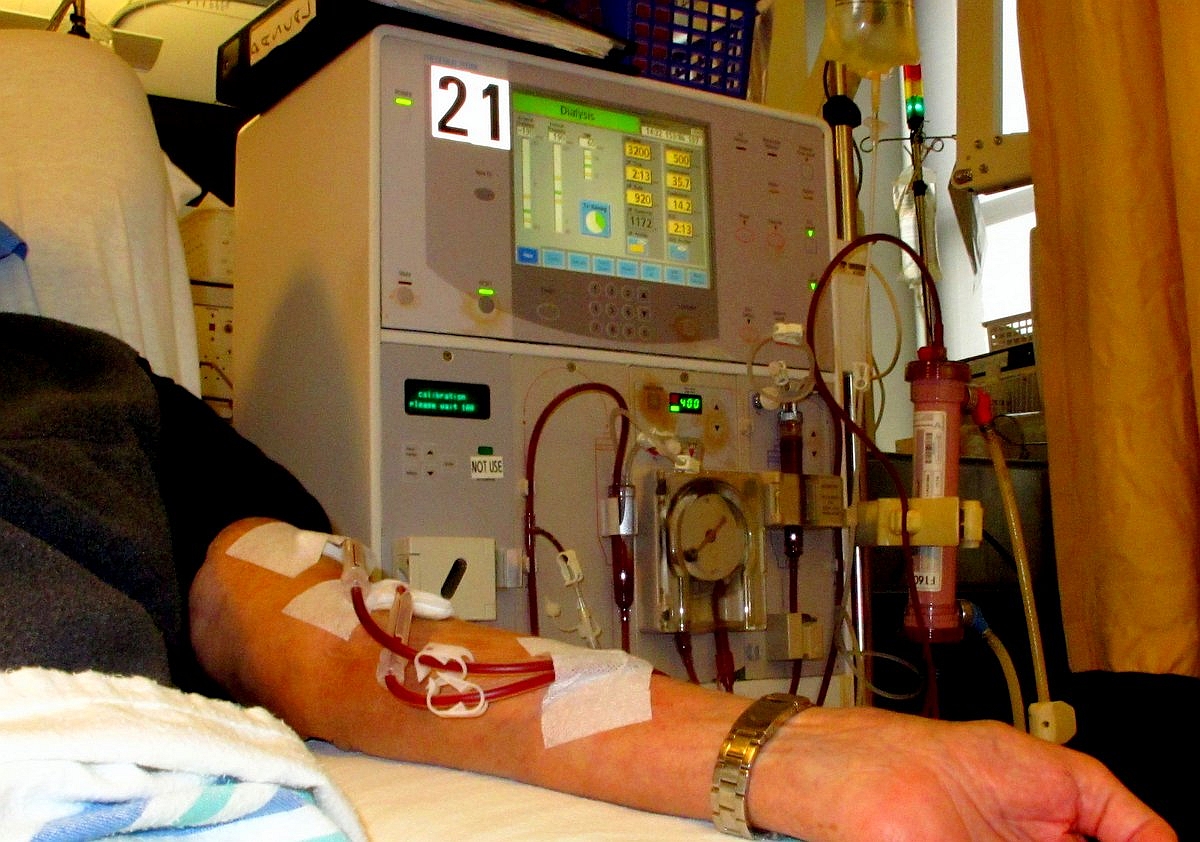
We've just had a paper published on how people who need to do hemodialysis at home manage the activity. Well done to Atish, the lead author.

People doing home hemodialysis are a small proportion of the people who need hemodialysis overall: the majority have to travel to a specialist unit for their care. Those doing home care have to take responsibility for a complex care regime. In this paper, we focus on how people use time as a resource to help with managing care. Strategies include planning to perform actions at particular times (so that time acts as a cue to perform an action); allowing extra time to deal with any problems that might arise; building in time for reflection into a plan (to minimise the risks of forgetting steps); and organising tasks to minimise the number of things that need to be thought about or done at any one time (minimising peak complexity). There is a tendency to think about complex activities in terms of task sequences, and to ignore the details of the time frame in which people carry out tasks, and how time (and our experience of time) can be used as a resource as well as, conversely, placing demands on us (e.g. through deadlines).

This study focused on particular (complex and safety-critical) activity that has to be performed repeatedly (every day or two) by people who may not be clinicians but who become experts in the task. We all do frequent tasks, whether that's preparing a meal or getting ready to go to work, that involve time management. There's great value in regarding time as a resource, to be used effectively, as well as it placing demands on us (not enough time...)

Friday, 7 December 2012

Hidden in plain sight

Last weekend, I was showing a visiting colleague around the Wellcome Collection. As he stopped to take a photograph with his iPhone, I noticed that he unlocked his phone first, then flicked through several screens to locate the camera app, selected it, and took the snap. I quickly took out my own iPhone and showed him how to access the camera function immediately by sliding the camera icon on the "lock" screen up. He was amazed: a mix of delighted and appalled. He considers himself to be a "power user" but had never noticed the icon nor discovered its purpose.

I had noticed the camera image a few months ago, following an operating system upgrade, but I also had not discovered its purpose unaided, having assumed that it was some kind of information rather than a functional slider that provided a useful short-cut. I had to be shown the use by someone else who had already discovered it. Doh!

Once discovered, the feature is quite obvious. But it is not as easily discoverable as it might be: there is no immediately presented information about key operating system changes, and few people search for features they have no reason to expect to find. Children may explore objects just to see what happens; many adults lose this. Just putting something on the screen does not guarantee that it will be noticed or appropriately interpreted.

Social interactions are so often a powerful means for learning about the world and the less obvious affordances of systems.

Saturday, 18 February 2012

Device use in intensive care

Atish Rajkomar's study of how infusion devices are used in intensive care has just been accepted for publication in the Journal of Biomedical Informatics: a great outcome from an MSc project!

It's a great achievement for someone without a clinical background to go into such a complex clinical environment and make sense of anything that's going on there. The Distributed Cognition approach that Atish took seems to have been a help, providing a way of looking at the environment that focuses attention on some of the things that matter (though maybe overlooking other things in the process). But this is a difficult thing to prove!

It's one of the real challenges for the design of future healthcare technologies: that to design effectively, the design team really does need dual expertise: in technology design and in clinical work. There are few courses available that provide such dual expertise. And also surprisingly few people seem to be interested in acquiring such expertise. Therein lies another challenge: how to make healthcare technologies interesting and engaging?